Dried Insect Protein Testing: Understanding Crude Protein Results
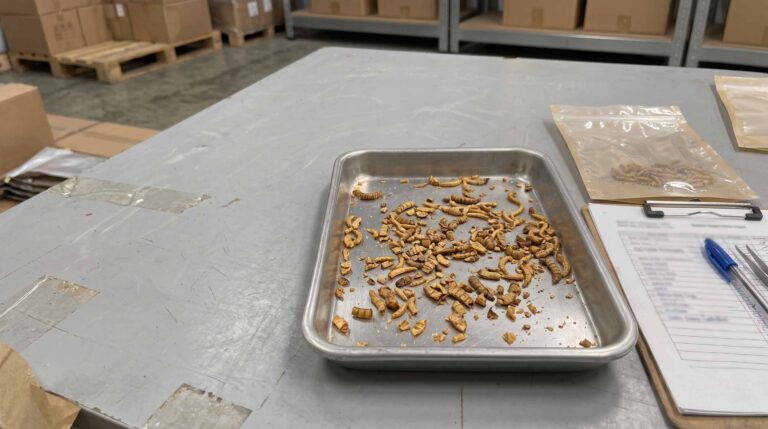
Learn how to interpret crude protein results for whole dried insects, compare testing methods, and verify batch documentation before purchasing.

Learn how to interpret crude protein results for whole dried insects, compare testing methods, and verify batch documentation before purchasing.

A practical guide to defining measurable acceptance criteria, reviewing laboratory evidence, and approving whole dried insect shipments.
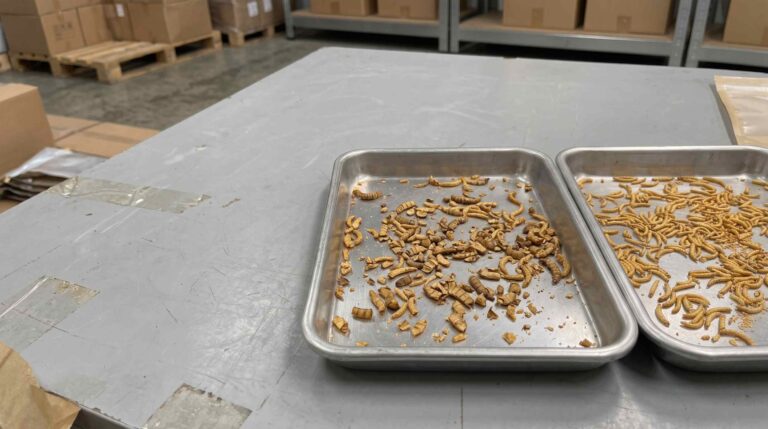
Learn how to assess whole dried insects versus broken material, define measurable breakage limits, review batch evidence, and set clear acceptance terms.

Sun and controlled-heat drying can produce commercially usable whole dried earthworms, but buyers should compare cleanliness, colour, moisture, uniformity, testing, capacity and packaging before choosing an option.
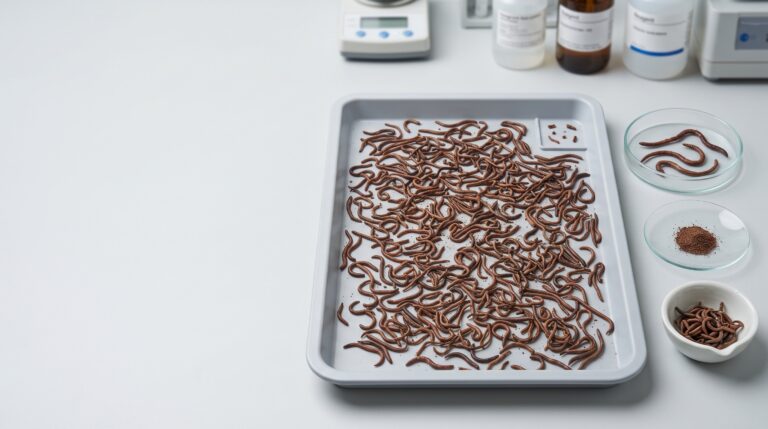
A technical B2B guide to setting dried earthworm specifications for ash, moisture and cleanliness, with practical guidance on methods, reporting basis, sampling and batch acceptance.
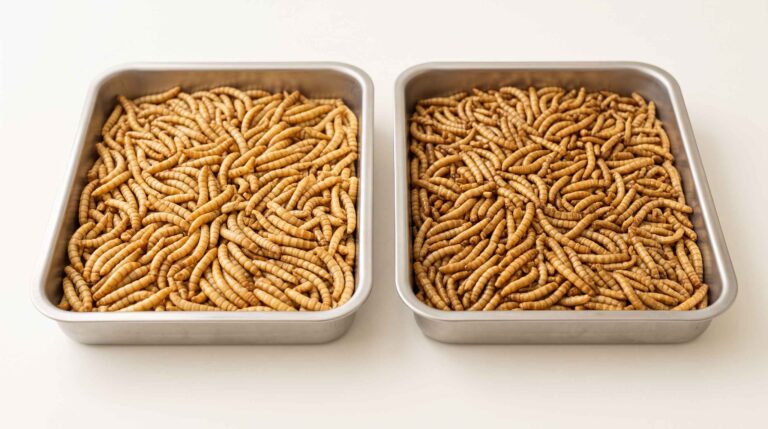
Microwave and hot-air drying can produce commercially suitable whole dried mealworms, but the finished products may differ in colour, texture, intactness and batch consistency. This guide explains what B2B buyers should compare before selecting a processing option.
A: Yes. Dried earthworms contain natural anti-inflammatory compounds and are highly digestible. When formulated into senior dog diets, they support joint mobility and overall vitality.
A: Completely safe. Our industrial microwave drying process acts as a rapid sterilization method, eliminating pathogens and bacteria while preserving the nutritional value, ensuring perfectly safe ingredients for dog treats.
A: Gram for gram, dried grasshoppers offer nearly double the crude protein of raw beef (up to 60-70% protein). They require significantly less water and land to produce, offering a highly sustainable pet food ingredient.
A: Yes. Dried BSFL provides a rich source of taurine, essential amino acids, and healthy fats necessary for feline heart and eye health. Their high palatability also appeals to picky eaters.